• No products in the cart.
Back to top

ARCHITECT SUMBA

An architect working in Raja Ampat must treat the marine ecosystem as a primary design obligation, not a backdrop. The studio takes on private residences and boutique hospitality projects across the archipelago for a specific kind of client: those for whom the remoteness and ecological significance of the location are part of the brief, not complications to be managed around.

About The Studio

Contemporary private residence in Hong Kong designed with refined architecture and framed harbour views within a dense urban environment

The studio approaches projects in Raja Ampat with an understanding that this is among the most ecologically sensitive building environments in Indonesia, and that the architecture must reflect that from the first design decision. Site analysis here begins with what should not be disturbed as much as with what the site offers. Every structural, material, and environmental decision is made in the context of a landscape where the marine ecosystem is the primary asset and the primary responsibility.

Building across this archipelago is defined by two conditions that operate simultaneously: the extraordinary visual landscape above water, including limestone islands, jungle canopy, and open sea, and the marine biodiversity below it. Both inform the architectural approach. Structures are designed to minimise ground disturbance and marine impact, to be reached and serviced entirely by boat, and to perform reliably in a remote equatorial environment where maintenance access is limited, and the ecological cost of failure is high.

Raja Ampat’s hospitality market is the dominant driver of development here. Private residential projects are rare, and the clients who undertake them are typically operating at the intersection of personal ambition and genuine conservation commitment. The studio approaches both hospitality and residential projects in this context with the same rigour: buildings that are worthy of the location, honest about what building here requires, and designed to last rather than to be impressive at first and difficult thereafter.

Areas of Work

hong-kong-hillside-peak-residence-architecture

Private Residences

Private residences in Raja Ampat are among the most remote and ecologically significant building projects the studio undertakes. They are for clients with a deep commitment to the location: its marine environment, its isolation, and the responsibility that comes with building in one of the world’s great conservation areas. Each project is approached with that responsibility built into the brief, producing architecture that minimises its footprint, manages its environmental impact rigorously, and creates a home of genuine quality in one of the most extraordinary settings on the planet.

Contemporary penthouse residence in Hong Kong designed with refined architecture and panoramic city views

Hospitality

Boutique dive lodges and small eco-resort projects are the predominant built typology in Raja Ampat, and the quality varies enormously. The studio designs hospitality projects that are built around the specific experience of being here: the water, the marine life, the silence, the sense of being at the edge of the known world, rather than importing a generic tropical resort language into a landscape that deserves something more specific. Arrival by boat, the interface between land and sea, and the architecture of the dive and guest experience are all treated as design problems from the outset.

Contemporary private residential architecture in Hong Kong designed with refined spatial clarity and modern architectural detailing

Resorts

Resort masterplanning in Raja Ampat operates within strict environmental constraints that are non-negotiable and, in the studio’s view, correct. Low density, minimal land disturbance, and a built footprint that is proportionate to the carrying capacity of the site are all principles that the regulatory environment reinforces and the studio’s approach reflects independently. The result is resort architecture that earns its position in this landscape through restraint and precision rather than scale or spectacle.

Process

BUILDING IN RAJA AMPAT

Raja Ampat sits at the far eastern edge of the Indonesian archipelago. It is remote in distance, extreme in ecological significance, and without parallel as a marine environment. Building here is categorically different from building anywhere else on this list. The regulatory framework is strict, the logistics are substantial, and the responsibility to the surrounding ecosystem is real and ongoing. Projects that are designed and built well within these conditions produce architecture of a distinct quality, not because of what they add to the landscape but because of how carefully they inhabit it.

The market for high-quality architecture in Raja Ampat is small but serious. The clients who build here, whether a boutique dive lodge on Misool, an overwater retreat near Wayag, or a private island compound on Waigeo, are among the most discerning and most environmentally committed in Indonesia. They are not looking for the trappings of luxury development from better-connected islands. They are looking for architecture that is as extraordinary as the place they have chosen to build in, and that operates within it with genuine ecological integrity.

Key considerations for building in Raja Ampat:

  • Marine protected areas: Much of the archipelago falls within conservation zones. The regulatory status of any site must be established before design work begins.
  • Full off-grid operation: The grid does not reach most sites. Power, water, and waste systems are primary design obligations from the concept stage.
  • Boat-only access: All materials, contractors, and ongoing supplies arrive by sea. Construction programme, material specification, and build sequencing are designed around this from the outset.
  • Ecological material selection: Treatments, coatings, and structural systems that could impact the surrounding marine environment are excluded, regardless of performance benefits elsewhere.
  • Conservation-first client profile: Clients building in Raja Ampat typically have a strong ecological commitment. The brief reflects this and the architecture must honour it.
  • West Papua regulatory context: Building in Southwest Papua province involves a different regulatory and permitting environment from Bali or Lombok. Early engagement with local advisors is essential.

Frequently Asked Questions

The clients who build private residences or boutique hospitality projects in Raja Ampat are a specific group: those for whom the remoteness and the ecological significance of the location are the point, not the obstacle. These are not clients who have ended up in Raja Ampat by default. They have made a deliberate choice to build in one of the world’s great conservation landscapes, and they want architecture that reflects the seriousness of that choice: built to last, designed with ecological integrity, and specific to a place that has no architectural equivalent anywhere else in Indonesia.

Significant, and the studio treats them as primary design criteria rather than regulatory hurdles. Buildings in Raja Ampat must generate their own power and manage their own water and waste without impacting the surrounding marine environment. Material choices are assessed for their potential impact on the coral ecosystem. Ground disturbance is minimised. The carrying capacity of the site and its relationship to the marine protected area status of the surrounding water are established before any design decisions are made. These obligations are not constraints on good architecture. They are part of what defines it in this context.

Demanding, and rewarding when done well. Everything that goes into a building in Raja Ampat arrives by boat: materials, tools, and the construction team. Supply chains are long, logistics are complex, and the margin for error in specification and documentation is small. The studio designs with these realities built in from the concept stage, making structural and material decisions that are appropriate to what can actually be built here, detailing for durability in a remote environment, and maintaining close involvement through the build to protect the outcome. Projects designed honestly for these conditions are more likely to be built well than those that treat the logistics as someone else’s problem.

Each of the four main islands, Waigeo, Batanta, Salawati, and Misool, offers a distinct character and development context. Waigeo, as the largest and the location of the regional capital Waisai, has the most established access infrastructure. Misool, in the south of the archipelago, is associated with the highest-quality private and boutique hospitality development and offers a more remote, exclusive character. Batanta and Salawati are less developed and offer a different quality of isolation. The studio’s site assessment process identifies what a specific island and plot genuinely offers before any design decisions are made.

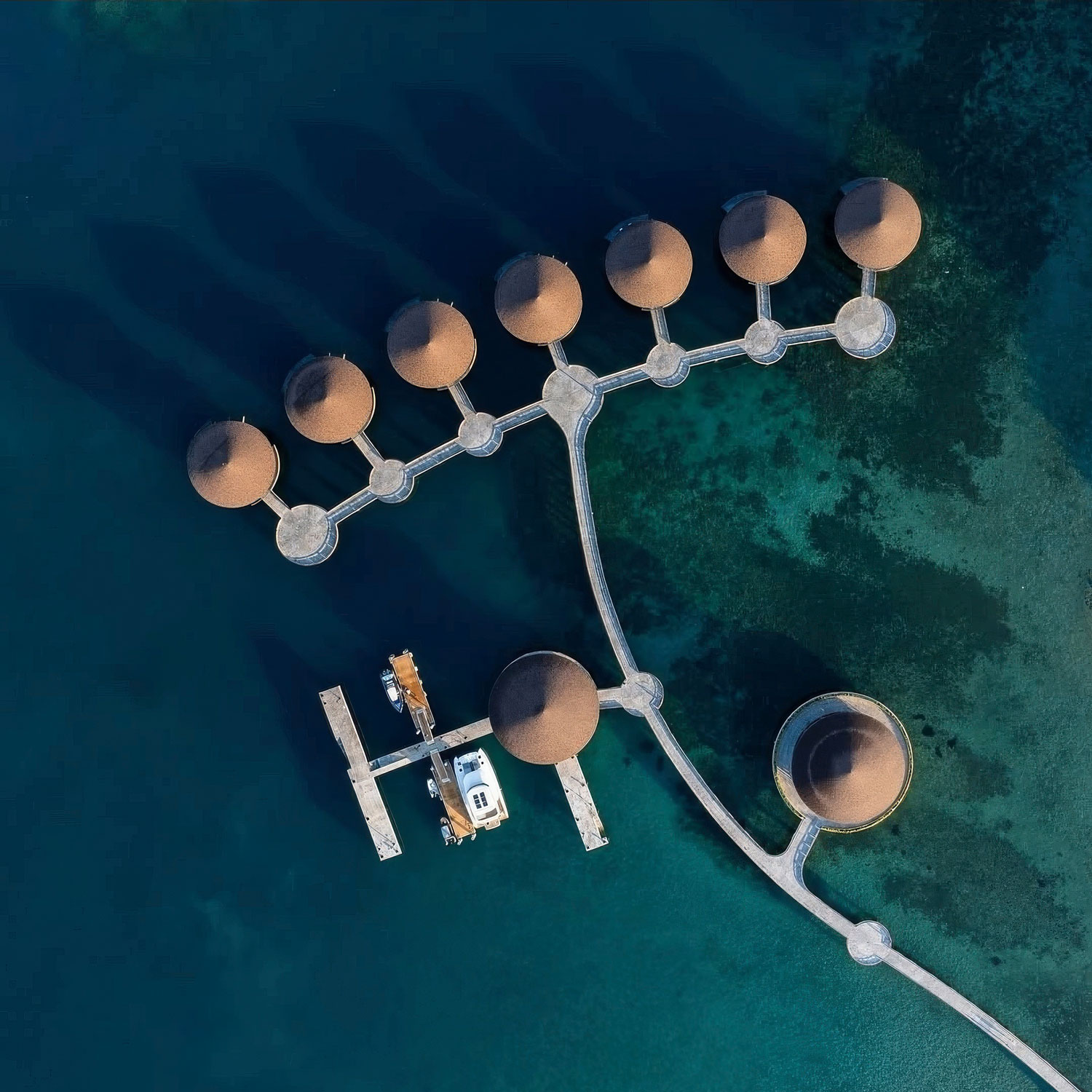
It depends entirely on the site and the design. Overwater structures built carelessly cause direct damage to the coral systems below them through shading, anchor damage, chemical runoff, and physical disturbance. Overwater structures designed with specific attention to the marine environment below, with open deck geometry that allows light penetration, structural systems that avoid coral disturbance, and drainage designed to protect the water, can coexist with a healthy reef. The studio designs overwater elements only where the ecological assessment supports it and always with the marine environment treated as a primary design consideration alongside the spatial and guest experience.

Raja Ampat falls within Southwest Papua province, which involves a different regulatory and permitting framework from the more familiar environment of Bali or Lombok. Marine protected area designations, conservation zone boundaries, and environmental impact requirements all apply at varying levels depending on the specific location of a site. The studio works with local regulatory consultants and conservation advisors to establish the full permitting context for a given project before design work begins, ensuring the project is structured correctly from the outset and that the regulatory process is navigated without surprises.

Small-scale, ecologically serious, and centred on the experience of the marine environment. The most successful hospitality projects in Raja Ampat are those that understand why guests come here: the diving, the isolation, the sense of being in a place of genuine ecological significance, and design the architecture around that experience rather than importing a standard resort programme. The studio approaches boutique dive lodges and eco-retreat projects from this position: what does the guest experience of this specific place feel like, and how does architecture support rather than dilute it?

Yes, and the market evidence supports it. The guests who travel to Raja Ampat are among the highest-spending and most discerning in Indonesian dive tourism. They are paying for remoteness, ecological quality, and an experience that cannot be replicated closer to Bali. Projects that deliver on that expectation at a high architectural standard command premium rates and attract repeat guests. The logistical cost of building here is real, but it is proportionate to a market that is explicitly paying for what only a remote, ecologically intact location can offer.

A conversation about the site, the island, and what you want to build, alongside an honest discussion about the ecological context and what responsible building here involves. The studio will want to understand the specific location, its regulatory status, your intentions for the project, and your approach to operating within the marine environment before anything else. From there, an early site and regulatory assessment forms the foundation for a design process that is specific to Raja Ampat and honest about everything building here requires.

0
    0
    Your Cart
    Your cart is emptyReturn to Shop